

Traceability just stopped being a sustainability side project. That was the real headline out of the 2026 AAFA Traceability & Sustainability Conference in Denver this July, where two days of keynotes and panels made one thing clear: knowing where your product comes from, and proving it, is a core operational requirement.
Here is what mattered most.
The Top 3 Takeaways from the AAFA Traceability & Sustainability Conference 2026
As regulation continues to expand at a rapid pace, standardization has become essential to keeping up. Without shared templates and a common language across brands, retailers, and suppliers, compliance quickly turns into a resource-intensive guessing game. In this environment, traceability is no longer just a sustainability initiative—it has become the operational foundation that supports consistency and accountability. With greater visibility across supply chain tiers, organizations are now better equipped to make faster, more informed sourcing decisions.
The conference opened with VF Corporation Chief Supply Chain Officer Stuart Pond putting real numbers behind the challenge: 260 million units, 230 vendors, 100 countries of origin.
From there, the regulatory sessions painted a landscape in motion. EU due diligence timelines are sliding from 2027 to 2029, Digital Product Passports are pushing brands toward product-level data they don't fully have yet, and states like California are turning textile EPR from policy talk into real deadlines. The consistent advice across every panel:
“Don't wait for the rules to settle before you build the systems to meet them.”
Case Study: Smart Shirts' Road from Detention to Transformation
Nowhere did that advice carry more weight than in “From Detention to Transformation,” a session that put the stakes in blunt, human terms. Danny Gold Hwang, CEO of Smart Shirts, walked the room through what happened when U.S. Customs and Border Protection called with a detention notice on December 24, 2022. Alongside Andre Raghu, Partner at HAP International, and Osbaldo Arroyo, Vice President of Corporate Social Responsibility at Carters, Hwang shared how the company responded not with denial, but with a decision to build the most transparent system it could and open its books to regulators. HAP International helped liaise directly with the U.S. government throughout the process.
The lesson that stuck: the issue on paper was transparency, but the underlying issue was always the data. Smart Shirts hadn't fully mapped its own use cases before the detention hit, and evidence, not intention, was what ultimately restored trust. One line from the session captured it well: “evidence is integrated into the manufacturing process.” Hwang's advice to anyone facing a similar call was straightforward: be professional, polished, and concise with CBP, because how you show up matters as much as what you show. Smart Shirts has since gone fully vertical across Vietnam and Cambodia, added a farm in Australia, and automated much of its spinning and cutting operations, proof that a detention can become the catalyst for a stronger, more traceable operation rather than a permanent setback.
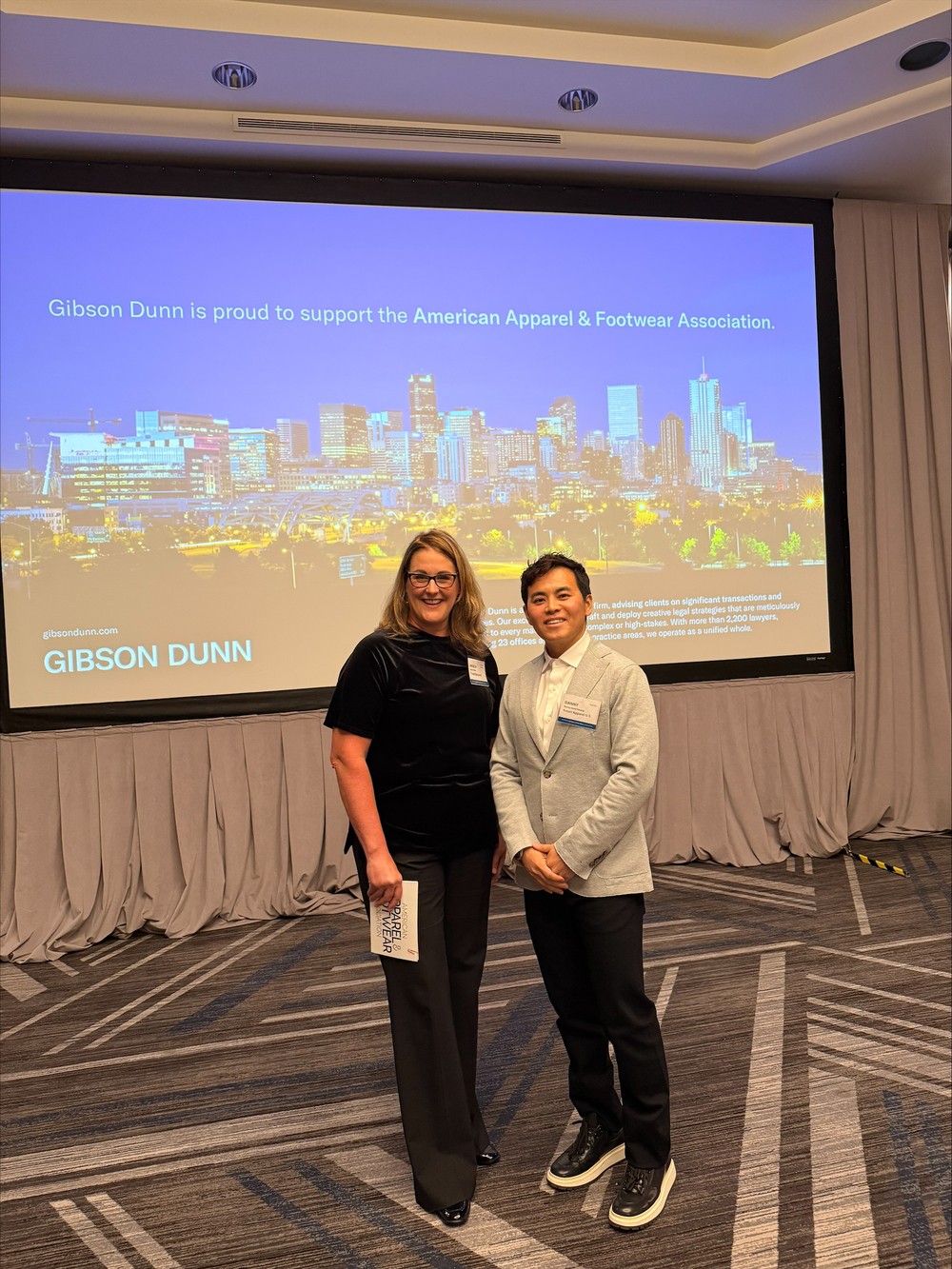
That same resilience showed up in the next session “Traceability Across Tiers: From Pilot to Practice,” featuring Angela Rhea, VP of Product & Industry Consulting at TradeBeyond. The panel discussed that Tier 1 is the easiest part and the real challenge sits further upstream, at the raw material to farm level, where the production story gets complicated by color variations, batch level production, and additional processing and finishing tiers.
More complexity is added by matching dates between tier suppliers, converting units and metrics so data means the same thing across tiers, and understanding the production process throughout the lifecycle for chain of custody documentation to tell a complete story. It's detail-oriented work, but it's exactly the infrastructure the TradeBeyond platform delivers, not just collecting supplier data, but ensuring the full story can be succinctly told.
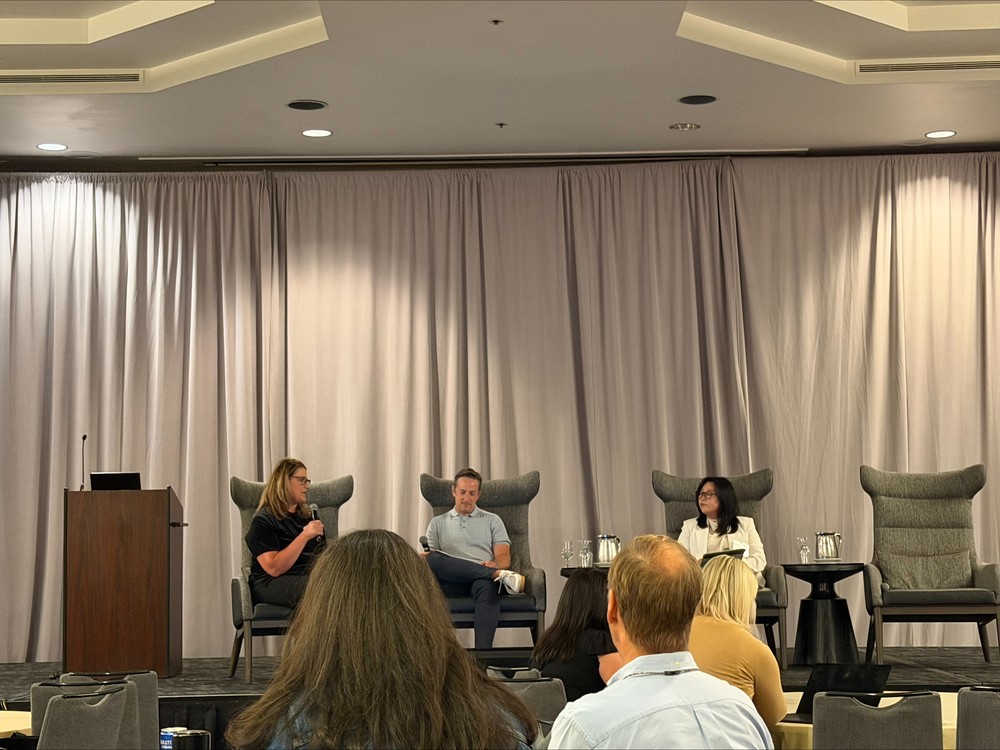
During the session “Turning Due Diligence Policy into Practice” one exchange stuck with attendees: as one speaker put it, “make sure data is never input into the platform twice.” Suppliers are finding themselves entering duplicative information for the same retailer, different roles, within the same company. They are asking the question of retailers, “Why don’t you have one tool, so they can enter the information into one location? Why are different teams asking me for the same information again, at another time?” At TradeBeyond, our platform is an end-to-end solution, from Line Plan to Shipment, sharing data across the various modules so a Supplier only enters it once, reducing supplier efforts therefore, keeping costs down.
Thank you to all of our guests or an enjoyable evening of thought-provoking conversation, and collaborative partnership. TradeBeyond truly wants to support your future end to end platform needs and we can only do this by servicing our customers and their suppliers.


In closing, it was obvious that regulation is expanding faster than any retailer can manage alone. Industry collaboration, standardization, and an end-to-end platform is the way forward. Let TradeBeyond show you how we can help you simplify data input one time, into one source of truth, as we work together to address evolving regulation and requirements.
More Ways to Connect with TradeBeyond
Denver was just one stop. TradeBeyond hosts and participates in events throughout the year covering traceability, supply chain visibility, and compliance for brands and retailers navigating this same landscape. If this recap resonated, visit our events site to see what's coming up next and register for a session near you.
Upcoming Events from TradeBeyond
Global Sourcing Summit 2026 (Nov 11, 2026) — their flagship event, pitched as the premier gathering for sourcing professionals looking to sharpen strategy and drive sustainable growth.
Supplier Management & Compliance Masterclasses (Europe & Americas) — hands-on sessions covering supplier onboarding, compliance management, audits, and risk tracking through real-world workflows.
Inspection Masterclasses (Europe & Americas) — similar hands-on format, but focused on quality: risk-based inspection, defect analysis, and corrective actions.
Executive Lunches (Europe & Americas) — invite-only lunch series for senior retail and supply chain leaders to swap insights in a private setting.
Global Sourcing Leadership Forum — Hong Kong (Sep 7, 2026) — an invite-only roundtable on tariffs, AI, sustainability, and supply-chain resilience; limited seats, apply to attend.
Global Sourcing Happy Hour — Hong Kong (Aug 27, 2026) — an off-the-record networking mixer for senior sourcing and supply-chain leaders.
Audience profile: Attendees are mostly senior retail and supply chain professionals — practitioners in sourcing, supplier management, and inspection who join the masterclasses, and executives who join the invite-only lunches, forums, and Summit — united by a focus on tariffs, AI, ESG, and supply-chain resilience.
Benefits of attending: Events offer hands-on skill-building, candid peer networking with true counterparts, early insight into regulatory and geopolitical shifts, direct access to TradeBeyond's expertise, and, for executives, added visibility among industry peers.
Inhaltsverzeichnis
Abonnieren Sie unseren Newsletter
Weitere Fachartikel
Artikel
Defect Classification: How to Build a Critical, Major, and Minor Defect System
How to build a defect classification system - critical, major, and minor defect definitions, AQL thresholds, category examples, and enforcement at scale.

Artikel
Digital Product Passports: Is Your Product Data Ready?
Learn why DPP readiness is a data project, not a QR code project, with insights from TradeBeyond and EON on compliance, traceability and circularity.

Artikel
The Life of a Jacket: How Digital Product Passports Will Change What Happens After You Buy
Learn how Digital Product Passports connect product and supply-chain data to support traceability, circularity, resale, repair and recycling.
" height="32px" id="vQcZRDBpx" width="32px"/></svg>)