What Does the Next Generation Sourcing Organization Look like?
Key takeaways and action steps from TradeBeyond’s Q3 2026 Hong Kong Sourcing Leadership Roundtable, where sourcing executives came together to debate resilience, trust, and what AI should — and shouldn’t — be allowed to touch.

On a Monday morning in Hong Kong, with a room full of sourcing directors, VPs and heads of supply chain from brands and retailers you would recognize instantly — fashion, big-box retail, pet care, outdoor gear, toys — are being told to put their phones away and, more unusually, to stop presenting.
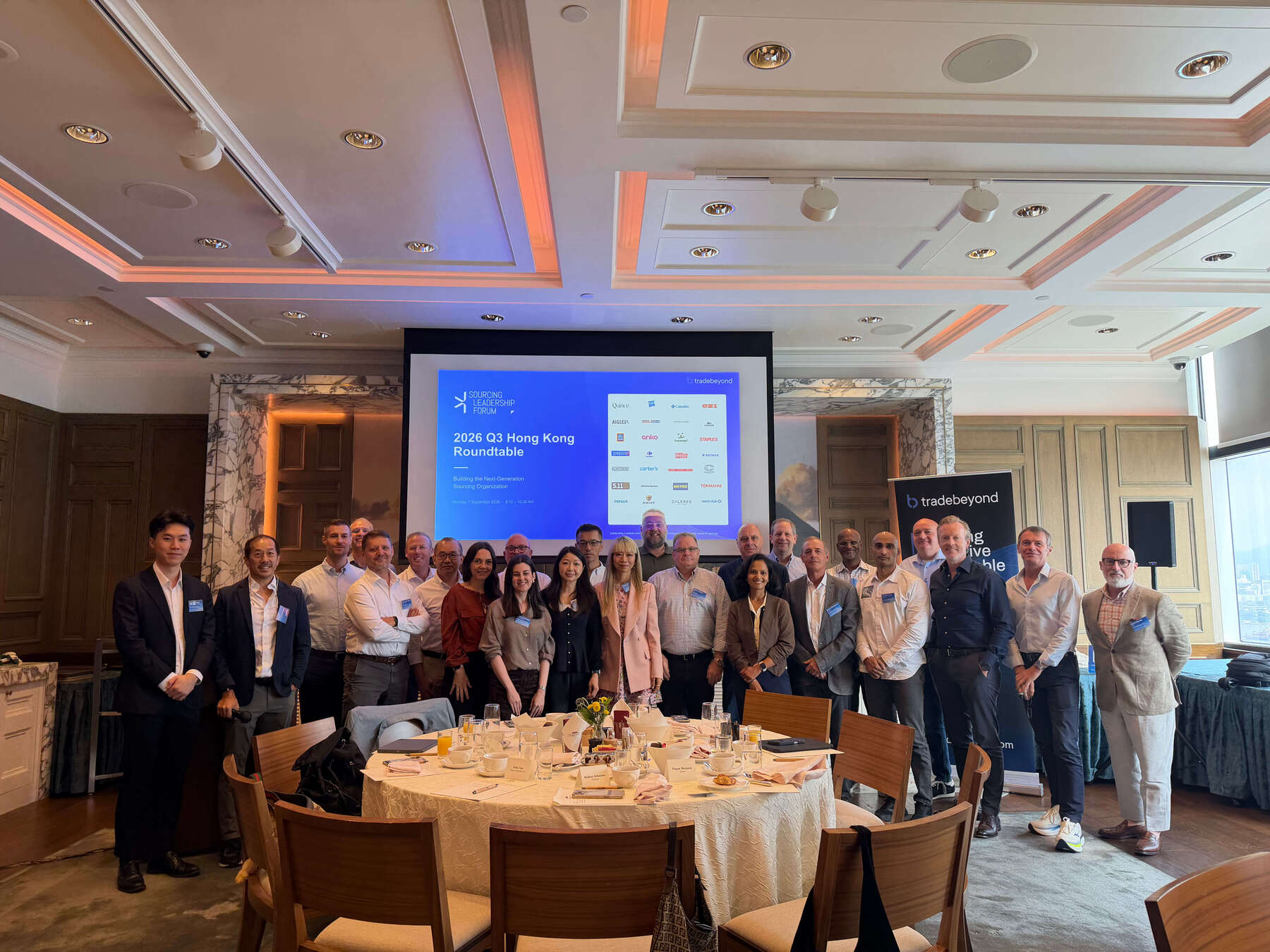
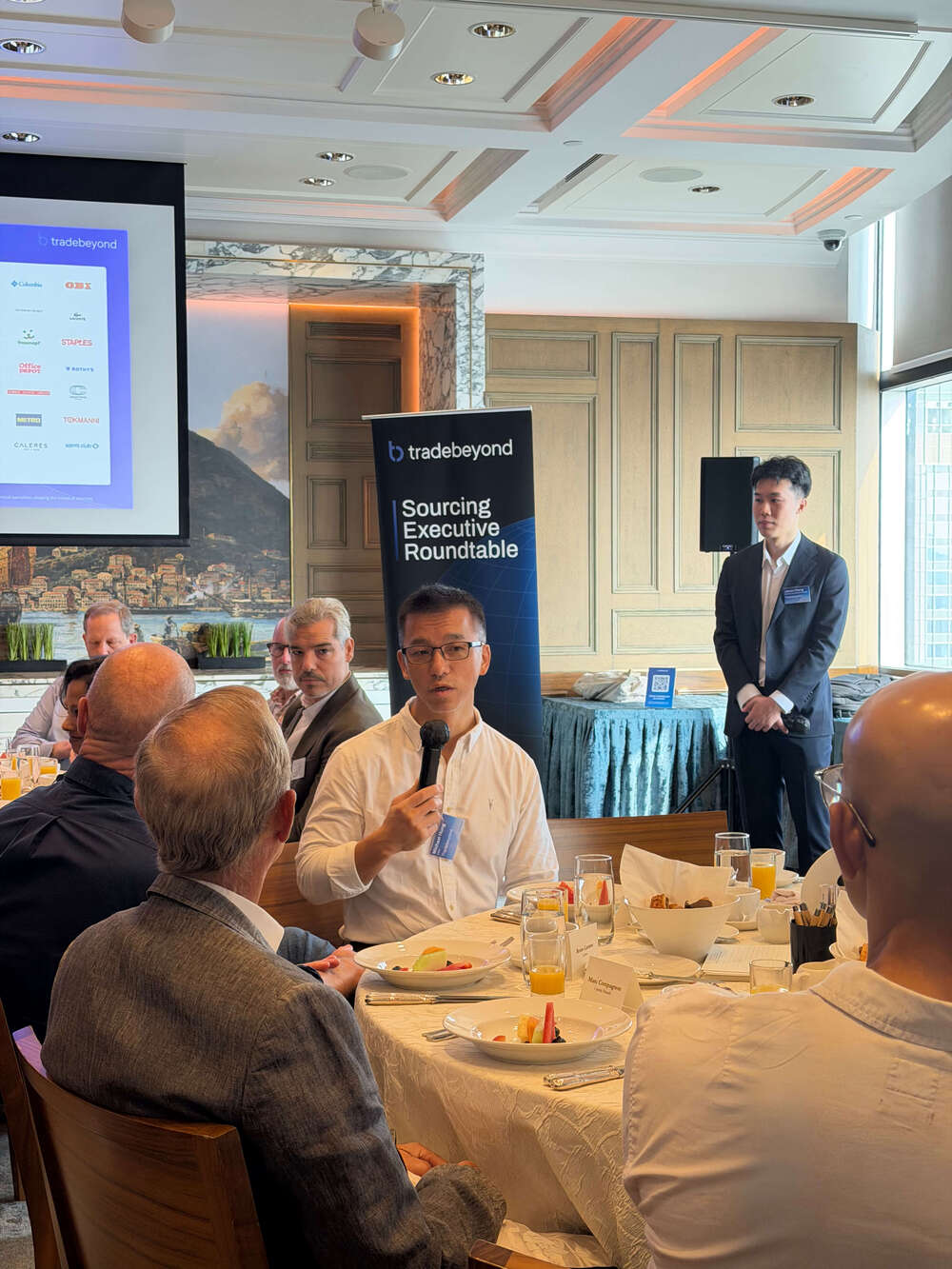
That was the whole point of TradeBeyond's Q3 Sourcing Leadership Forum roundtable, themed “Building the Next-Generation Sourcing Organization.” Instead of a speaker and a panel, the morning ran as a peer lead “mastermind” session: small tables, six or seven peers each - to frame a real, unsolved problem, with the rest of the table firing back advice.
Before anyone spoke, TradeBeyond shared results from our latest sourcing and supply chain survey of the room - focused on all things that could, or should, build the next generation sourcing organization. Here's a high level run down for the busy supply chain executive:
1. AI is the one thing everyone agrees on. Readiness is not.
Ninety percent of respondents ranked AI and automation among their top three forces shaping sourcing over the next 18 months — ahead of tariffs, ahead of geopolitical risk, ahead of everything. It was the only force nobody placed in their bottom three.
But ask the same room how digitized their sourcing organization actually is, and the picture flips: 90% describe themselves as merely “digitized in parts, limited integration.” One participant reported a connected platform. Zero called themselves data-driven.
That gap showed up in the room's own stories, too. One executive described a quick win.
“I used to receive market information from my buyers... it would take me one week to compile everything. Now I've got my little AI thing — I do it in three hours.”
But the same technology cuts the other way when it's used without judgment. Another attendee's biggest AI complaint wasn't about their own team — it was about the emails their team was sending:
“Stop sending us detailed emails written by AI — we're tired of using AI to summarize what these emails were in the first place.”
The lesson the room kept coming back to: the minimum starting point for AI isn't a platform decision. It's fixing the manual, fragmented, spreadsheet-and-email foundation underneath it — and being disciplined about where AI actually adds a step worth taking, instead of adding noise.
2. Everyone measures cost. Almost no one measures exposure.
The survey's most uncomfortable topic compared what the room says matters against what it actually tracks. Supplier risk and country concentration ranked as the room's second-biggest threat by average score — yet only one respondent treats it as an executive metric. Every metric that actually made the top five — cost savings, quality, speed to market, supplier scorecards — measures performance. None of them measure exposure.
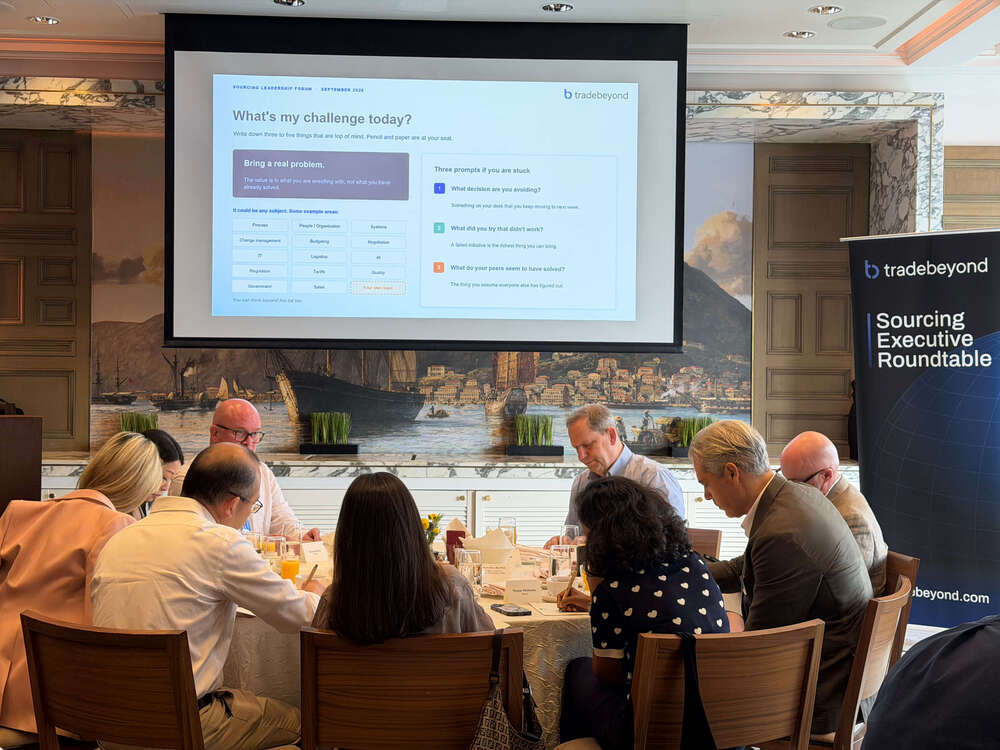
The room's own hot-seat stories made the stakes concrete. One table spent its round on a single-source component that had run away in price:
“From $1.50 to $16 — and you use two per product. We can't raise the price because the market won't bear it.”
The table's honest answer, delivered with a laugh but meant seriously: don't let a category get that concentrated in the first place.
This is where the room hit its most productive disagreement: resilience or savings, pick one. Several tables brought a version of the same question — how do you rebalance out of a single country without giving up the year-on-year cost target your board still expects?
3. AI literacy is an obstacle across the board.
Eighty percent of the room named AI literacy and adoption as the capability they most need to build.Change management and adoption resistance topped the list, followed by a lack of trust in AI's output, and plain skills gaps. Only two respondents named a purely technical barrier — legacy systems or data quality. Everyone else pointed at people.
That tracked almost exactly with what played out at the tables. As one table discussed AI adoption, the underlying fear surfaced plainly, however lightly it was said out loud: getting good at the tool can feel like talking yourself out of a job.
The advice that landed best at that table wasn't a rollout plan — it was to find one open-minded, junior buyer, run a small pilot with them, and let a visible win do the persuading a mandate never could.
The appetite is for AI to take the manual work away — not the judgment calls.

4. Buying and sourcing are supposed to be on the same team. They rarely feel like it.
If one theme cut across every table without prompting, it was this: the oldest, least glamorous tension in the industry — the gap between buying teams and sourcing teams — is still the thing quietly slowing everything else down. One participant, who had moved from a buying role into sourcing, put it simply:
“I think it's really a mindset — mindset and trust. Buying and sourcing are not really in the same boat.”
Another offered the practical antidote: replace opinion with data, and a lot of the emotional charge in that relationship disappears on its own.
“The less data you have, the more difficult it is to change the mindset. It just shows facts. So if you're the buyer, you don't want to work with me — that's your call. But if it clearly shows the financial community you've made the wrong decision... each trigger becomes a much more collaborative approach.”
And in a moment that got one of the biggest laughs of the morning, an attendee reached back a couple of centuries for the most quotable line of the day — a piece of borrowed wisdom from the French statesman Talleyrand, offered as the best advice they'd personally received on facing an overwhelming mandate:
“When I analyze myself, I get scared. When I compare myself to others, I feel more comfortable.”
It also happened to summarize the entire morning: every table discovered, in various ways, that their “impossible” problem was the room's most common one.
Actionable takeaways
Audit your exposure metrics, not just your performance metrics. If concentration risk ranks in your top three threats but never reaches your board deck, that's the gap to close first.
Start AI with the boring 20%. Manual entry, OCR, reporting consolidation and forecasting were the consistent early wins in the room — not supplier negotiation or category strategy.
Pilot AI with your most open-minded junior buyer, not your most skeptical senior one. A visible small win converts skeptics faster than a mandate does.
Put a number in front of the mindset problem. Several participants found that data — not persuasion — was what actually rebuilt trust between buying and sourcing.
Join the Conversation
These roundtables happen quarterly in Hong Kong, with sessions in Europe and North America. They are curated for management-level professionals in sourcing, supply chain, and procurement at brands and retailers.
Upcoming Events in Asia:
TradeBeyond's Inspection Masterclass — a free, hands-on session on prioritizing inspections, scheduling and CAPA tracking — runs in Hong Kong on 24 September, with further dates in Shanghai and Ho Chi Minh City.
The flagship 16th Global Sourcing Summit lands at the Cordis Hotel, Kowloon on 11 November 2026, with sessions on AI beyond the hype cycle, regulation and risk, and the full value equation for sourcing.
Find us at the next event or roundtable!
Register you interest: https://www.tradebeyond.com/events
Follow Us on LinkedIn
Table of Contents
Subscribe to the Newsletter
More Articles

Article
Beyond the Scorecard: Closing the Performance-to-Decision Gap
Connect supplier performance, risk and business context to identify meaningful changes, guide corrective action and improve sourcing decisions over time.

Article
Stop Managing Supplier Records. Start Managing Supplier Relationships.
Learn how a connected supplier view links spend, performance, compliance and capabilities to improve sourcing decisions across the enterprise.

Article
What If Your Supplier Tiers Changed as Often as Your Risk Data Does?
Annual supplier reviews can miss shifting dependencies and compliance gaps. Discover how connected data supports faster, more informed supplier decisions.
Get in contact with one of our experts
" height="32px" id="vQcZRDBpx" width="32px"/></svg>)
Unify people, data, and processes to simplify global operations
Empower smarter, faster decisions that drive growth and profit
Build resilient, responsible networks for a changing world