AI in Supply Chain: How It Helps Teams Move From Reactive to Predictive Decisions
Explore how AI in supply chain helps teams detect risk earlier, improve forecasting, manage documents, and prioritize exceptions.
8 min read
Post By:
TradeBeyond Team

AI in supply chain is often discussed as if it will make supply chains run themselves.
That is not where most of the value is today.
For retailers, brands, and supply chain teams, the more useful promise is practical: AI can help people see risk earlier, understand complex signals faster, and decide what to do next with better context. It can flag a purchase order that is likely to slip, surface supplier performance patterns that are easy to miss, scan compliance documents, or help quality teams focus inspections where risk is highest.
The shift is not from people to machines. It is from reactive operations to earlier, more informed decisions.
That distinction matters because supply chains are full of cross-functional signals that rarely arrive in a clean, obvious pattern. Supplier data, order changes, inspection results, shipment events, audit documents, product specs, and planning assumptions all shape the outcome. AI becomes useful when it helps teams make sense of those signals before issues become expensive.
What AI in supply chain actually means
AI in supply chain refers to the use of technologies such as machine learning, predictive analytics, natural language processing, computer vision, and generative AI to analyze supply chain data, detect patterns, predict risks, automate information work, and recommend actions.
It can support many parts of supply chain management, including sourcing, supplier management, forecasting, quality control, compliance, logistics, traceability, and order execution. But AI is not a single tool, and it is not a fully autonomous supply chain.
A better way to think about AI is as an intelligence layer across supply chain operations. It helps teams interpret data, prioritize exceptions, and decide where attention is needed. In some cases, it can automate narrow tasks. In higher-impact decisions, it should support human judgment rather than replace it.
Why AI depends on connected supply chain data
AI only works as well as the data and context behind it.
If supplier records are incomplete, order status is outdated, quality results sit in a separate workflow, and compliance documents are stored in disconnected folders, AI will struggle to produce reliable recommendations. It may detect a pattern without understanding the business context, surface an alert teams cannot validate, or automate a workflow that already has weak ownership.
That is why AI adoption depends on digital readiness. Teams need clean records, connected workflows, defined ownership, and enough history for AI to learn from. A supply chain management platform can help create that operating layer by connecting supplier, product, order, quality, compliance, and shipment data across the business.
This is also where AI connects naturally to digital supply chain transformation. Digital transformation builds the foundation: connected data and workflows. AI builds on that foundation by helping teams detect risk, interpret information, and recommend next steps.
Use case 1: risk detection and early warning signals
One of the clearest uses of AI in supply chain is risk detection.
Supply chain teams often see problems only after they are already visible in the operation: an order is late, a shipment is delayed, a supplier misses a milestone, or a document is missing before release. AI can help by analyzing signals across supplier performance, shipment history, order changes, quality issues, and compliance gaps to identify patterns earlier.
The goal is not to predict every disruption. No model can do that. The goal is to give teams earlier warning when risk is rising.
An AI-powered supply chain platform can support use cases such as PO risk rating, smart alerts, and transport visibility by monitoring operational data for anomalies and potential disruptions. When those alerts are tied to clear workflows, teams can investigate sooner and decide whether to adjust sourcing, production, shipment planning, or customer commitments.
Use case 2: supplier performance and supplier risk insights
Supplier networks generate a lot of useful data, but much of it is hard to interpret manually.
Late deliveries, quality issues, certification gaps, capacity constraints, delayed responses, and changing order patterns can all signal supplier risk. AI can help identify those patterns across a larger supplier base and highlight where sourcing teams should pay attention.
That can support supplier scoring, segmentation, risk alerts, and performance reviews. It can also help teams identify which suppliers are improving, which are becoming less reliable, and which may need development or alternatives.
A supplier management platform gives AI a stronger foundation by centralizing supplier profiles, capabilities, certifications, performance history, and risk signals. That context matters. AI is more useful when it can connect supplier behavior to categories, facilities, compliance status, and open orders rather than treating each signal in isolation.
Use case 3: demand, forecasting, and planning support
AI is often associated with forecasting, and for good reason. Machine learning can help detect demand shifts, identify anomalies, analyze seasonality, and support lead time or inventory decisions.
But AI does not automatically fix forecasting.
If the inputs are weak, the assumptions are stale, or the feedback loop between forecast and actual outcomes is broken, AI may simply make poor assumptions faster. Forecasting still depends on clean demand signals, supplier constraints, lead time realities, and business context.
That is why AI should be treated as support for supply chain forecasting, not a replacement for planning discipline. It can help teams spot patterns and test assumptions, but the value comes when those insights connect to sourcing, inventory, supplier, and logistics decisions.
Use case 4: document intelligence for compliance and traceability
AI can also reduce one of the most manual parts of supply chain work: document handling.
Retailers and brands manage invoices, bills of lading, certificates, audit documents, purchase orders, packing records, chain-of-custody evidence, and supplier compliance files. These documents are often fragmented across emails, portals, shared drives, and partner systems.
AI can help scan, classify, extract, compare, and link document data. That matters for compliance and traceability, especially when teams need evidence for regulations, responsible sourcing programs, or customer requirements.
For example, AI can help identify missing documents, detect inconsistencies, connect shipment records with supplier or product data, and organize chain-of-custody evidence. The value is not only reducing manual review. It is improving evidence readiness before a compliance issue becomes urgent.
The OECD has connected AI-enabled supply chains with digitalized, interoperable, and trusted trade systems in its 2026 report on efficiency, resilience, AI, and environmental performance. For supply chain teams, that reinforces a practical point: AI works best when documentation, data, and workflows are trustworthy enough to support decisions.
Use case 5: quality, inspection, and exception prioritization
Quality teams often face a resource problem. Not every product, supplier, factory, or shipment carries the same risk, but many inspection processes still treat work too evenly.
AI can help prioritize where attention should go. By analyzing supplier history, product risk, factory performance, past defects, inspection outcomes, and route-level patterns, AI can help quality teams focus on higher-risk suppliers, products, and shipments.
That does not remove the need for quality expertise. It helps teams use that expertise where it matters most.
A quality management and inspection platform can support this by connecting inspection data to orders, suppliers, products, and corrective actions. When AI is tied to that context, teams can move from broad inspection coverage toward more targeted risk management.
What AI cannot fix on its own
AI can be powerful, but it cannot fix a broken operating model.
It cannot make disconnected data trustworthy by itself. It cannot resolve unclear ownership. It cannot repair weak supplier collaboration. It cannot decide business trade-offs without human direction. And it cannot make teams trust recommendations they cannot explain, validate, or act on.
This is why responsible AI matters. The NIST AI Risk Management Framework emphasizes trustworthy and responsible AI through risk management practices. Its AI RMF Core organizes AI risk management around functions such as govern, map, measure, and manage. Those ideas are relevant for supply chain teams because AI outputs can influence real decisions about suppliers, shipments, compliance, quality, and customer commitments.
Bad data can create bad recommendations. Over-automation can reduce trust. Opaque scoring can make teams uncomfortable relying on AI for high-impact decisions. The right goal is not to remove people from the process. It is to give them better signals, more context, and clearer choices.
How retailers and brands can adopt AI responsibly
The best starting point is a clear business problem, not a broad AI mandate.
Start with use cases where the decision is important, the data is available, and the outcome can be measured. Supplier risk alerts, PO risk scoring, document classification, inspection prioritization, and exception monitoring are often better starting points than trying to automate large strategic decisions.
Then define how AI will be used. Which recommendations can trigger automatic workflows? Which require human review? Who owns the data? Who validates outputs? What happens when AI flags a risk but teams disagree?
Governance should cover data quality, model outputs, permissions, escalation, and feedback loops. Teams should also measure whether AI improves real outcomes: earlier risk detection, less manual work, faster exception handling, better compliance readiness, fewer late surprises, or more focused quality review.
AI adoption works best when teams treat it as part of the operating model, not a separate experiment.
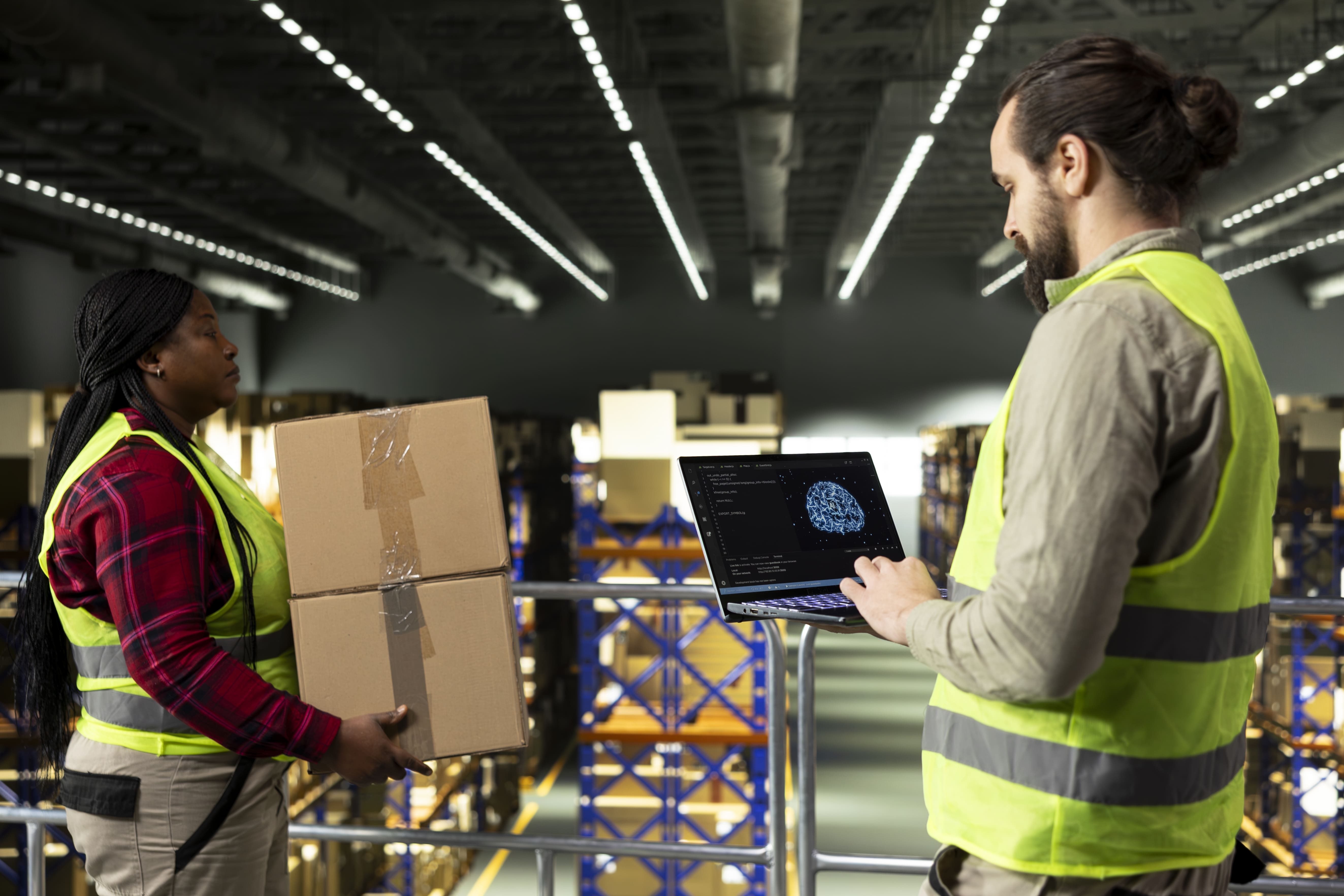
AI creates value when it improves decisions, not when it adds another dashboard
AI in supply chain matters when it helps teams move from reactive operations to earlier, more coordinated decisions.
For retailers and brands, the strongest use cases are not about replacing supply chain expertise. They are about helping people see patterns sooner, understand risk faster, and act with more confidence across suppliers, orders, quality, compliance, and logistics.
AI creates value when it turns scattered signals into useful action. Not another dashboard. Not another isolated tool. Better decisions, made earlier, by teams that have the context to trust what they see.

TradeBeyond Team
Supply Chain Experts
TradeBeyond Team combines practical supply chain experience and strategic insight to help businesses navigate complexity, improve operational performance, adopt modern solutions, and apply best practices across planning, execution, and performance monitoring.

Table of Contents
Get Supply Chain Insights That Matter
Practical strategies, trends, and best practices for modern supply chains
More Articles

Article
What Is a Supply Chain Analyst? Role, Skills, Salary, and Career Path
A supply chain analyst turns supply chain data into clearer decisions, helping teams understand performance, spot risks, and improve planning, logistics, and execution.

Article
What Is Supply Chain Consulting? Services, Benefits, and When to Use It
Supply chain consulting can help companies diagnose performance gaps, improve processes, and turn supply chain strategy into practical execution.

Article
What Is Supply Chain Finance? How It Works, Benefits, and Risks
Supply chain finance can improve cash flow and supplier liquidity, but it works best when payment terms, trade data, and risk are transparent to everyone involved.
Get in contact with one of our experts
" height="32px" id="vQcZRDBpx" width="32px"/></svg>)
Unify people, data, and processes to simplify global operations
Empower smarter, faster decisions that drive growth and profit
Build resilient, responsible networks for a changing world