Supply Chain Management: Strategies, Processes, and Technologies
Learn how supply chain management works—from planning and sourcing to manufacturing, logistics, and reverse logistics—plus strategies and technologies shaping modern SCM.
10 min read
Post By:
TradeBeyond Team

What Is Supply Chain Management?
Supply chain management (SCM) is the coordination and optimization of all activities involved in sourcing, producing, and delivering products to customers. It integrates planning, procurement, manufacturing, logistics, and returns across multiple companies and business functions.
According to the Council of Supply Chain Management Professionals (CSCMP), supply chain management includes the planning and management of sourcing, procurement, production, and logistics activities as well as collaboration with suppliers, intermediaries, and customers.
The goal of SCM is to ensure the right products reach the right customers at the right time and cost while maintaining quality, efficiency, and resilience.
Core Processes of Supply Chain Management
Most supply chain frameworks organize operations into several core processes. The widely used SCOR model includes:
Plan
Source
Make
Deliver
Return
These processes operate simultaneously rather than sequentially.

Planning and Demand Management
Demand forecasting and sales & operations planning (S&OP) determine production volumes, sourcing requirements, and inventory levels.
Modern planning uses multiple data sources including:
historical sales data
market trends
promotional calendars
economic indicators
AI-based demand sensing tools
Accurate demand planning helps organizations reduce stockouts while avoiding excess inventory.
Sourcing and Procurement
Procurement teams select suppliers, negotiate pricing, and manage vendor relationships.
Key sourcing decisions involve evaluating:
supplier capacity
cost structures
compliance standards
geopolitical risk
Digital sourcing platforms increasingly replace spreadsheet-based RFQ processes, enabling better supplier collaboration and faster decision-making.
Manufacturing and Production
Manufacturing converts materials and components into finished goods.
Supply chain managers must coordinate production schedules, supplier lead times, and quality standards to ensure on-time delivery.
Product lifecycle management (PLM) systems often serve as a central repository for specifications, bills of materials (BOMs), and product approvals.
Logistics and Distribution
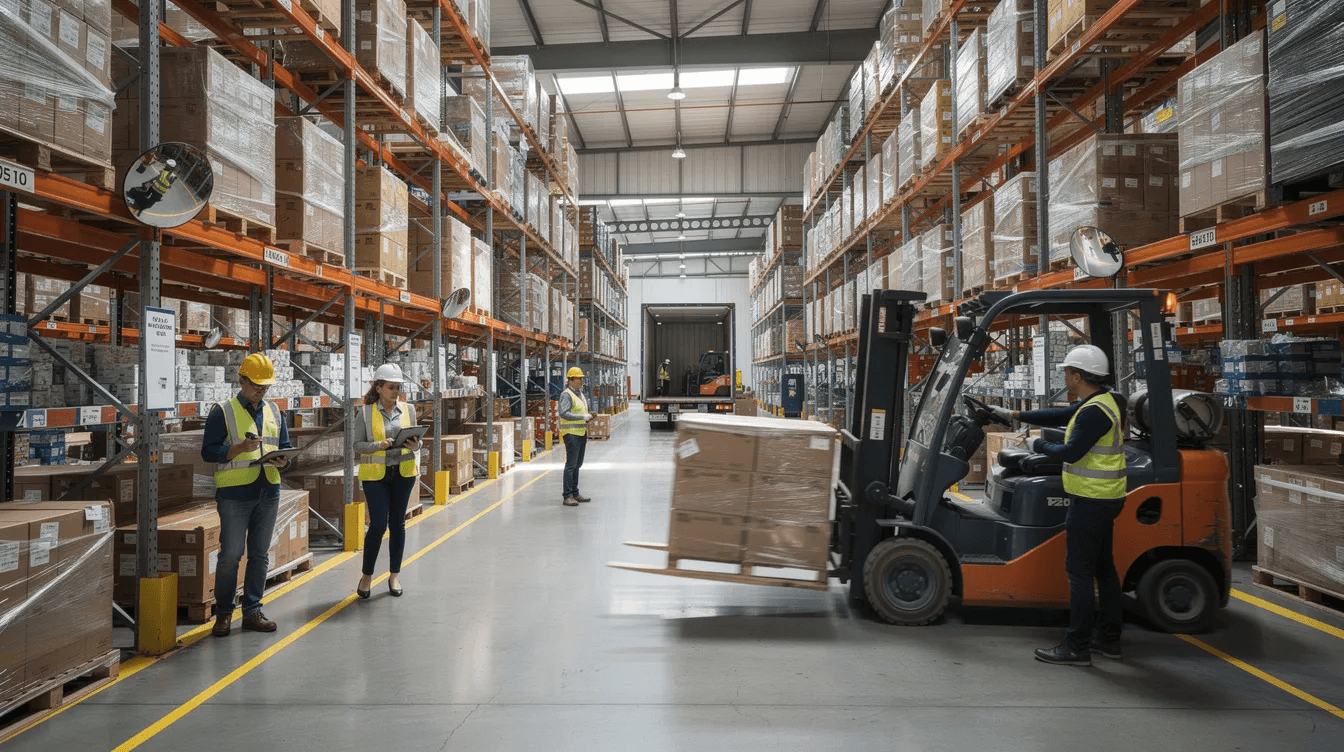
Logistics management focuses on transporting and storing goods efficiently throughout the supply chain.
Key logistics decisions include:
selecting shipping modes
choosing distribution center locations
managing warehouse operations
coordinating last-mile delivery
Effective logistics ensures products move through global supply networks efficiently while maintaining service levels.
Reverse Logistics
Returns management is an essential but often overlooked part of supply chain management.
Companies must process returned goods efficiently through:
inspection and restocking
refurbishment or resale
recycling or disposal
Improved reverse logistics processes reduce costs and support sustainability initiatives.
Supply Chain Management Strategies
Organizations adopt different SCM strategies depending on product characteristics and market conditions.
Lean Supply Chains
Lean supply chains focus on cost efficiency and waste reduction. They are best suited for stable, predictable demand patterns.
Agile Supply Chains
Agile supply chains prioritize speed and flexibility to respond quickly to changing customer demand.
Resilient Supply Chains
Resilient supply chains emphasize risk mitigation through diversification, contingency planning, and supply chain visibility.
Sustainable Supply Chains
Sustainability initiatives increasingly shape supply chain strategy through ESG compliance, traceability requirements, and circular economy models.
Supply Chain Management Technology
Technology plays a critical role in coordinating complex global supply chains.
Key technology categories include:
ERP systems for enterprise resource planning
PLM platforms for product development and specifications
TMS systems for transportation management
WMS platforms for warehouse operations
Supply chain visibility tools for tracking shipments and inventory
Modern cloud-based supply chain management platforms increasingly connect retailers, suppliers, logistics providers, and compliance partners within a shared digital network.
The Future of Supply Chain Management
Several trends are shaping the next generation of supply chain management:
Digital supply chains
Cloud platforms and APIs connect multiple companies across global supplier networks.
Advanced analytics and AI
Machine learning improves forecasting accuracy, predicts disruptions, and optimizes inventory decisions.
Supply chain transparency
Regulations and consumer expectations are pushing companies to track products deeper into supplier networks.
Regionalized supply chains
Companies are balancing global sourcing with nearshoring strategies to reduce risk and lead times.
Organizations that successfully integrate data, technology, and cross-company collaboration will be better positioned to manage increasingly complex global supply networks.

TradeBeyond Team
Supply Chain Experts
TradeBeyond Team combines practical supply chain experience and strategic insight to help businesses navigate complexity, improve operational performance, adopt modern solutions, and apply best practices across planning, execution, and performance monitoring.

Table of Contents
Get Supply Chain Insights That Matter
Practical strategies, trends, and best practices for modern supply chains
More Articles

Article
Quality Assurance Software: Connecting Requirements, Suppliers, and Evidence
Quality assurance software should do more than store records. Explore the workflows, integrations, and evidence trails that help product teams prevent failures and manage quality across suppliers.

Article
Quality Management Process: How Requirements Become Results
A quality management process connects requirements, responsibilities, supplier controls, verification, corrective action, and improvement. See how each stage turns quality expectations into repeatable operational results.

Article
Quality Inspection: What to Check, When to Inspect, and What Happens Next
Quality inspection is more than a final pass-or-fail check. Learn where inspections belong, how sampling and AQL shape results, what a reliable checklist includes, and how findings guide product and supplier decisions.
Get in contact with one of our experts
" height="32px" id="vQcZRDBpx" width="32px"/></svg>)
Unify people, data, and processes to simplify global operations
Empower smarter, faster decisions that drive growth and profit
Build resilient, responsible networks for a changing world